
Transcript
Announcer:
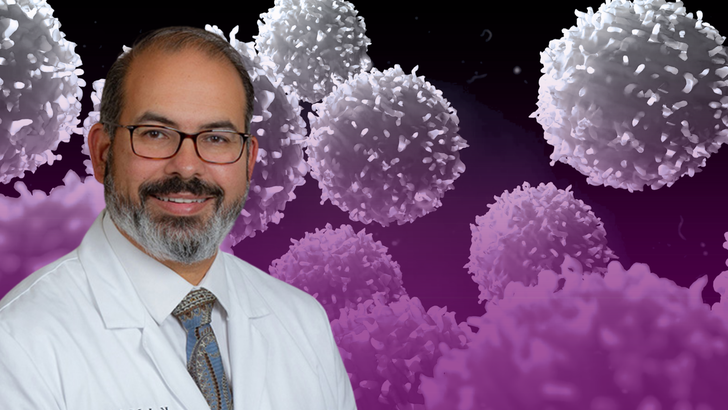
You’re listening to Project Oncology on ReachMD. On this episode, we’ll hear from Dr. Jorge Nieva, who’s an Associate Professor of Clinical Medicine at the University of Southern California’s Keck School of Medicine. He’ll be discussing how at-home subcutaneous immunotherapy delivery has the potential to improve the patient experience in oncology. Here’s Dr. Nieva now.
Dr. Nieva:
Patients have a tremendous burden from having to come to the office to receive treatments. This was really particularly evident during the COVID-19 pandemic when patients were literally afraid to come to the office to receive their care. And I think there are clinicians all over the country who have horror stories of patients who chose to stay home during the pandemic rather than come in to receive their cancer therapies. So we really have to think long and hard about how important is it for patients to come into the office to be seen, to get these treatments, and whether or not some of these things couldn’t be done easier at home.
Now that we have subcutaneous formulations for drugs like atezolizumab—and I think there will be more subcutaneous formulations on the way—it really makes it quite easy and feasible for these drugs to be administered in the home, and the more we do that, the less the burden will be on the patients to have to do all the things associated with coming to the doctor’s office: waiting in line, waiting for the drug to be mixed by the pharmacy. All these sorts of things really have a time toxicity for patients. We don’t think a lot about time toxicity for many of our treatments, but I think it’s something that is increasingly recognized as a burden of cancer therapy.
Immunotherapy treatment is really now becoming the mainstay for a large number of solid tumors. The number of cancers that can be treated with immunotherapy has rapidly grown, and so I think that we’re going to find that immunotherapy becomes standard for more than half the cancers that are out there. Now, of course, there are different immunotherapy drugs out there; each one has a very specific indication. But the reality is that these drugs are more alike than they are different, and they oftentimes have really quite overlapping indications.
Subcutaneous delivery of these drugs is something that is becoming increasingly easy to administer. They are now formulated with a product called hyaluronidase. And what the hyaluronidase enzyme does is it makes it easy for large macromolecules, like monoclonal antibodies, to achieve significant circulating drug levels without the need to put them directly into a vein. The delivery with subcutaneous formulations are much faster, and for patients, this is something that they could conceivably do at home themselves, or it could be done with the assistance of a nurse. Very little in the way of medical technology is necessary for the subcutaneous delivery of these medicines, and so I think there’s really a potential that these drugs, which are now really a mainstay of cancer treatment for so many tumor types, can increasingly be used for many people.
Announcer:
That was Dr. Jorge Nieva talking about the potential impacts of bringing subcutaneous cancer immunotherapies into the home. To access this and other episodes in our series, visit Project Oncology on ReachMD.com, where you can Be Part of the Knowledge. Thanks for listening!
